
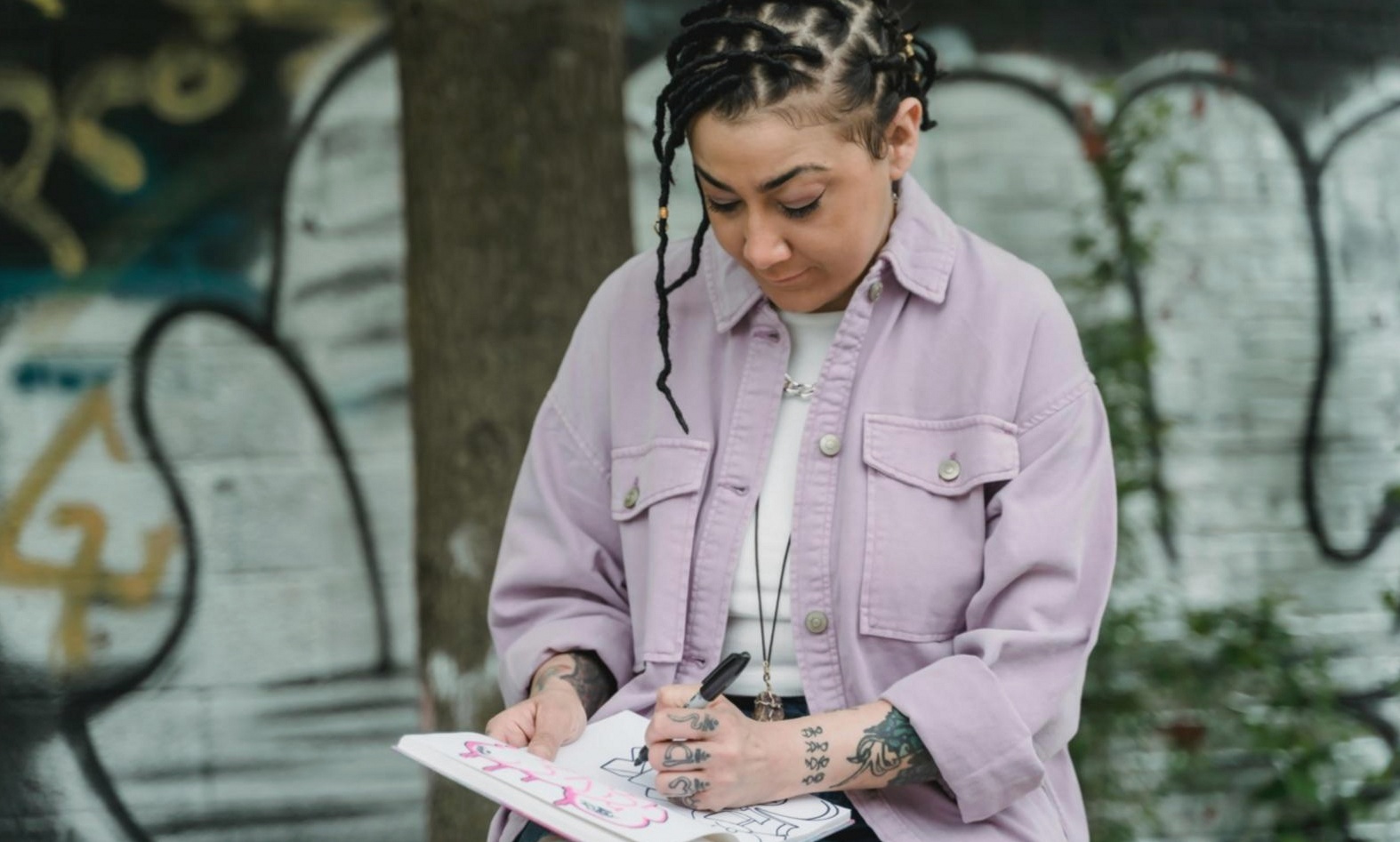
Dagny had tried three different drawing courses over 18 months. Each one left her in the same place: able to copy a tutorial step-by-step but unable to draw anything independently. The moment she closed the video, the skill disappeared.
The pattern behind the failure
She was following instructions without understanding the reasoning. She could replicate a nose drawn in a tutorial but had no idea why the lines were placed where they were. Copy-only practice builds familiarity with one image, not with drawing.
The turning point was a single question she started asking herself during practice: why does this line go here? If she could not answer it, she stopped and looked until she could.
What she changed, step by step
- Switched from copy-along tutorials to observational drawing from physical objects
- Spent time identifying the largest shapes in a subject before drawing any detail
- Drew the same object from three different angles in one session to build spatial understanding
- Wrote a short note after each session describing one thing she noticed, not one thing she liked
Before and after, honestly described
Before: her drawings looked like the tutorial she had copied most recently. After eight weeks: her drawings looked like her own interpretation of what she was looking at. Still rough, but recognisably hers.
The gap between copying and understanding is where most people stall. Dagny closed that gap by slowing down and asking more questions of the work in front of her, not by practising faster or more often.