
Claimhavens
Claimhavens

Drawing from the ground up

Specialist interview

Teodora Vaszary on learning to draw from scratch

Teodora has spent twelve years teaching adults who believe they have no natural talent. Her approach to the fundamentals is methodical, patient, and refreshingly honest about what actually works.

Specialisation Observational drawing
Based in Melbourne, AU
Teaching since 2013
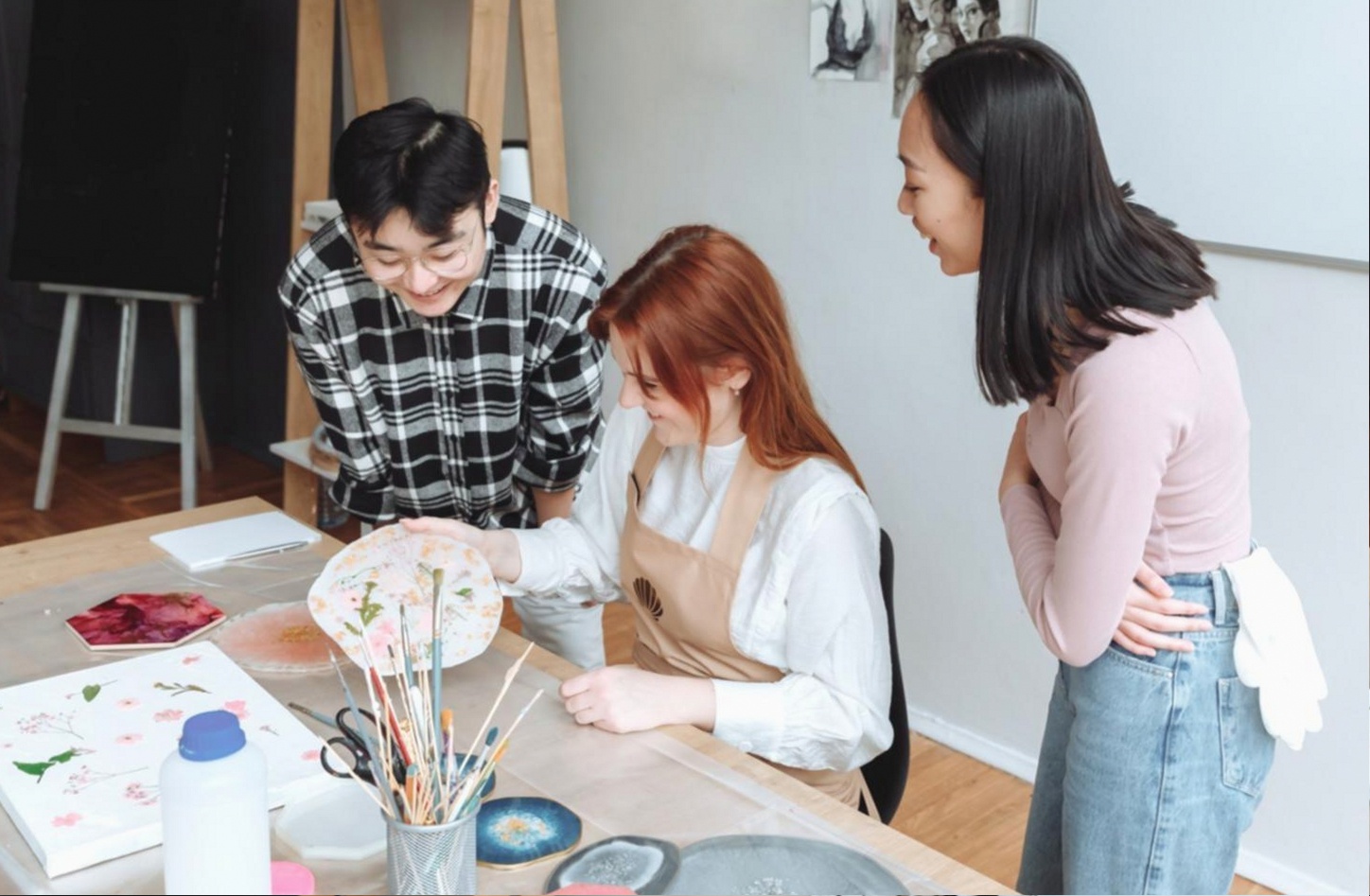
Teodora Vaszary demonstrating drawing fundamentals at a studio desk

Q Most beginners feel they lack talent. Is that even the right frame?

Talent is a story people tell to explain a skill gap they haven't tried to close yet. Drawing is a perceptual skill — you're training your eye to see relationships between shapes, edges, and proportions. That takes practice, not genes.

The students who struggle longest are usually the ones holding a fixed idea of what they should be able to draw. When I get them to simply copy a crumpled piece of paper, they're often surprised by how well it goes.

The key shift: stop drawing what you think something looks like. Draw what you actually see in front of you — the angles, the negative spaces, the light and shadow as abstract shapes.

Q Where do you start with a complete beginner, practically speaking?

Line quality first. Before anything else, I want students to feel comfortable making a deliberate mark — confident, not scratchy. We spend the first two sessions just drawing lines and ellipses repeatedly on cheap newsprint.

After that, contour drawing with a continuous line. No lifting the pen, no erasing. It forces attention onto the subject rather than the paper.

Practical sequence:
  • Confident mark-making on inexpensive paper
  • Contour drawing without lifting the pen
  • Gesture sketches — 30 seconds each, many repetitions
  • Basic value studies with a single pencil grade

Q How long before someone sees real progress?

Honest answer: most students notice a clear shift after about 40 focused hours. That's not 40 hours of doodling — it's deliberate practice with specific problems to solve each session.

The (often overlooked) factor is drawing from life, not photos. A 3D object gives you information a flattened image hides. Even a coffee mug on your desk is a better teacher than most tutorials.

What slows progress: switching subjects too often, drawing from imagination before building observational skills, and treating erasing as a correction tool rather than a last resort.

Three things Teodora wants every beginner to know

After an hour talking through technique, philosophy, and the common mistakes she sees every year, these are the ideas Teodora kept returning to.

01

Your sketchbook is not a portfolio

Fill it with bad drawings. Deliberately. The fear of wasting a nice page is one of the most reliable ways to stop practising. Use cheap paper and use a lot of it.

02

Proportion errors come from measuring by feel

Hold your pencil up and actually measure. Compare the height of one object to another. Use a plumb line. These are not tricks — they're how professional illustrators check their work every single session.

03

Shadow is a shape, not a smudge

Find the edge of the shadow and draw it as precisely as you would draw a contour. Beginners tend to blend shadows into gradients before they've established the form. That order matters.